
For decades, the indoor TV Antenna was a single-function device: plug it into one television, scan for channels, watch what is on. Recording required a separate DVR. Watching on a second TV required running coaxial cable through walls. And if the best antenna placement was in the attic while the television was in the living room — too bad. A new category of devices is rewriting those rules. Network-connected over-the-air tuners and DVRs — devices from the $99 range up — are transforming the antenna from a passive accessory into the hub of a whole-home streaming platform. They are the fastest-growing segment of the antenna ecosystem, and the NFL season about to kick off may be their breakout moment.
The OTA DVR Landscape — August 2026$99 — Tablo 4th Gen 4-tuner DVR, no subscription fees, streams to all devices
$109–$200 — HDHomeRun network tuner range (2-tuner to 4-tuner, ATSC 3.0 models)
$99–$199 — AirTV 2 and AirTV Anywhere, integrated with Sling TV guide
$249 — Zapperbox M1, first subscription-free ATSC 3.0 OTA DVR
Free (software) — Channels DVR and Plex, pairing with HDHomeRun or other tuners
What a Network OTA Tuner Does — and Why It Changes Everything
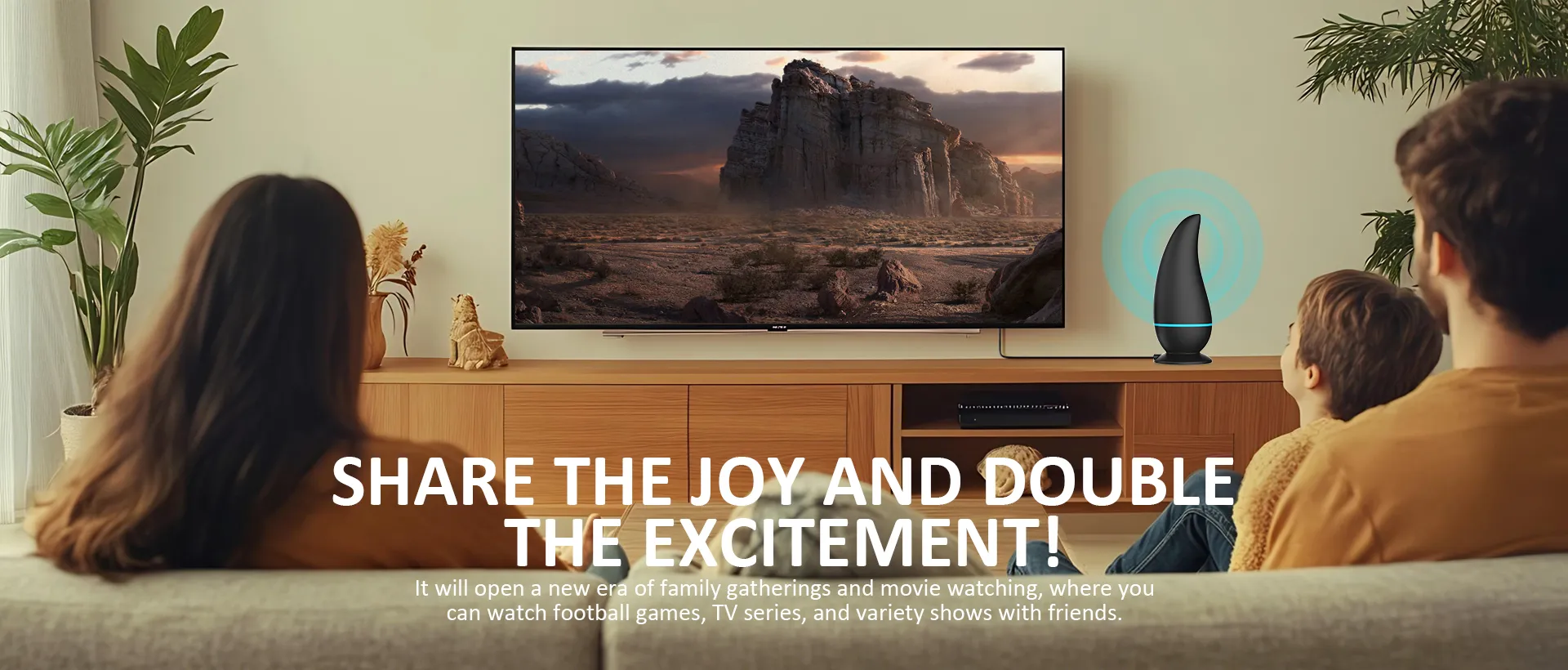
A traditional antenna setup involves a coaxial cable from the antenna to the television, period. The antenna and the TV are physically tethered. A network OTA tuner breaks that tether. The antenna plugs into a small box — roughly the size of a deck of cards — that contains one or more ATSC tuners and a Wi-Fi radio. That box connects to the home network. It receives over-the-air broadcast signals, tunes to a selected channel, encodes the video as an IP stream, and delivers it over Wi-Fi to any device in the home — smart TVs, smartphoness, tablets, laptops, streaming boxes, even gaming consoles. The antenna now lives wherever reception is best — the attic, a second-story window, a high shelf in the corner office — completely independent of where anyone actually watches television.
Add DVR capability, and the transformation is complete. A Tablo or HDHomeRun paired with Channels DVR or Plex records broadcast programming to a connected USB hard drive or network-attached storage, creating a personal cloud DVR for over-the-air content. Record the Sunday football game while watching it. Schedule a series recording for the evening news. Build a library of free broadcast movies from sub-channels. All content is accessible from every screen in the home — and, with remote access enabled, from anywhere with an internet connection. The antenna-plus-network-tuner-plus-DVR configuration delivers, for a one-time hardware cost of roughly $150 to $300, approximately 80 percent of the functionality of a TiVo or cable DVR, with zero monthly fees.
Subscription-Free: The Business Model That Is Winning
The defining competitive shift in the OTA DVR market over the past two years has been the move away from subscription fees. Earlier generations of over-the-air DVRs — notably TiVo, which pioneered the category — required monthly or lifetime service plans that added $5 to $15 per month or $250 to $550 upfront to the hardware cost. The value proposition was strained: pay $300 for hardware, plus $15 per month, to record free television? The math did not close for many consumers.
The current generation has resolved that tension. Tablo's 4th Generation device offers a four-tuner DVR with a 14-day program guide and whole-home streaming for a flat $99 hardware cost and zero subscription fees — a business model shift that PCWorld described as delivering "a single Tablo DVR that can stream video onto multiple TVs throughout the home" at a price point that competes with basic indoor Antennas. Zapperbox, a newer entrant, offers ATSC 3.0 NextGen TV compatibility in a subscription-free DVR at $249 — the first device to combine 4K broadcast reception, recording, and no monthly fee in a single product. HDHomeRun's hardware requires pairing with third-party DVR software, but options like Plex (free with a Plex Pass) and Channels DVR ($8 per month or $80 per year) create flexible configurations at various price points.
The subscription-free model aligns with the antenna consumer's psychology. The person who buys a $25 antenna to avoid an $83 monthly YouTube TV bill is not the person who will then pay $15 per month for a DVR subscription to record free channels. The antenna purchase is driven by cost avoidance. The DVR hardware purchase — even at a higher one-time price — fits that psychology. The monthly fee does not. The OTA DVR category's growth is being driven by manufacturers who understand this distinction.
ATSC 3.0: The Next Frontier for OTA DVRs
ATSC 3.0 — NextGen TV — adds 4K resolution, HDR, immersive audio, and improved indoor reception to over-the-air broadcasts. It also adds complexity for DVR manufacturers. ATSC 3.0 tuners are more expensive than ATSC 1.0 tuners. The encryption question — whether broadcasters will be permitted to DRM-protect their ATSC 3.0 signals, requiring internet-connected tuners and decryption key negotiation — creates regulatory uncertainty that complicates product development. And the audience for ATSC 3.0 DVRs is, for now, limited to the 90-plus US markets where NextGen TV signals are actually on the air and to the subset of consumers in those markets who own ATSC 3.0-compatible televisions or set-top boxes.
Despite these headwinds, ATSC 3.0 compatibility is becoming a key differentiator in the OTA DVR market. Zapperbox has made it the centerpiece of its product strategy. HDHomeRun offers ATSC 3.0 models alongside its 1.0 lineup. The 2026 NFL season — with the Super Bowl broadcasting from SoFi Stadium on February 7, 2027, which could be one of the first major sporting events available in ATSC 3.0 4K in multiple markets — may provide the consumer demonstration event that ATSC 3.0 DVRs need. When millions of cord-cutters discover they can watch the Super Bowl in 4K for free with an antenna and record it with a DVR, the value proposition of both ATSC 3.0 and OTA DVRs is demonstrated simultaneously.
The Sports Angle: Why Football Fans Are the OTA DVR's Best Customer
The OTA DVR's killer application — the use case that converts browsers into buyers — is sports. An NFL fan with an antenna can watch Sunday afternoon games on CBS and FOX, Sunday Night Football on NBC, and the playoffs for free. An NFL fan with an antenna and an OTA DVR can do all of that, plus record the game while watching it — pausing, rewinding, and replaying key plays — and start watching an hour late while the DVR records the remainder, skipping commercials. The DVR transforms the antenna from a live-only experience into a time-shifted, interactive one. And because the recording is local — stored on a hard drive in the home rather than in a cloud server — it is immune to the "this recording has expired" limitations and compression artifacts that plague cloud-based DVRs from streaming services.
The timing of the 2026 NFL season amplifies this dynamic. The Hall of Fame Game airs this Thursday, August 6. Preseason Week 1 begins August 13. The regular season kicks off September 9. For antenna and OTA DVR manufacturers, the six-week window from late July through early September is the most concentrated sales period of the year — and this year, it arrives on the heels of a World Cup that educated tens of millions of consumers about over-the-air television and created the largest antenna-aware population in history. A consumer who bought a $25 antenna for the World Cup in June is the ideal upsell target for a $99 OTA DVR in August. The purchase cycle is sequential: antenna first, then DVR. The World Cup created the antenna customers. The NFL season will create the DVR customers.
"The antenna gave you free TV. The OTA DVR gave you control over it. Together, they deliver what cable and streaming have spent decades charging monthly fees to provide."
Integration with Streaming: The Unified Guide
The most compelling feature of the current OTA DVR generation is not the recording capability — it is the integration. AirTV, designed to work with Sling TV, places over-the-air channels in the same program guide as Sling's streaming channels. A consumer scrolling through the guide sees ABC, CBS, FOX, and NBC from the antenna alongside ESPN from the Sling subscription — a unified experience that eliminates the "switch inputs to watch antenna" friction that has historically made OTA feel like a separate, second-class television source. Tablo's interface integrates free ad-supported streaming channels alongside over-the-air broadcasts, blurring the line between antenna content and internet content. Plex and Channels DVR combine OTA recordings with personal media libraries, creating a single interface for broadcast, recorded, and owned content.
This integration addresses the central user-experience problem that has limited antenna adoption among streaming-native consumers. The consumer who cut the cord in 2020 and has spent six years navigating Netflix, Hulu, and Disney+ through a streaming device interface does not want to switch to "Antenna Mode" on their TV remote and navigate a separate, clunkier interface for broadcast channels. The OTA DVR that integrates broadcast channels into the same app-based experience as streaming — same remote, same interface, same search — removes that friction. The antenna becomes just another content source in the streaming ecosystem, differentiated by being free and live rather than by requiring a different workflow.
What the OTA DVR Category Means for the Antenna Industry
The rise of network tuners and OTA DVRs changes the antenna industry's product strategy in two important ways. First, it shifts the antenna purchase from a standalone decision to a system decision. A consumer buying a Tablo or HDHomeRun needs an antenna to connect to it — and the antenna choice matters because the tuner's sensitivity and the antenna's gain together determine the number of receivable channels. This creates an opportunity for antenna manufacturers to position their products as the reception component of a home media system rather than as a standalone commodity.
Second, it changes the antenna's physical placement equation. A traditional antenna must be near the television it feeds. A network tuner frees the antenna to be placed wherever reception is best, anywhere in the home, connected to the tuner by a short coaxial cable, with the video distributed over Wi-Fi. This decoupling expands the addressable market for higher-gain, larger antennas — including outdoor models — that would be impractical to connect directly to a living room television but are easily connected to a network tuner in the attic or a utility closet. The OTA DVR does not compete with the antenna. It makes the antenna more useful — and by extension, expands the market for better antennas.
The Bottom Line
The indoor TV Antenna spent two decades as a single-purpose commodity — plug it in, watch live TV, that is it. The OTA DVR revolution has transformed it into something far more valuable: the hub of a whole-home, subscription-free television platform that records, time-shifts, and streams broadcast content to every screen in the house, integrated into the same interface as streaming apps. A $25 antenna plus a $99 network DVR delivers, for $124 total with zero monthly fees, a television experience that cable and streaming companies charge $80 to $150 per month to approximate. The NFL season starting in five weeks will put millions of new antenna owners in front of this math. The antenna got them in the door. The OTA DVR will keep them there.

 Español
 Portugues
 Pусский
 Français
 Deutsch
 日本語
日本語
 한국어
한국어
 العربية
 Italiano
 Nederlands
 Ελληνικά
 Svenska
 Polski
 ไทย
ไทย
 Türk dili
 हिन्दी
 Indonesia
 Melayu
 Tiếng Việt
 中文
中文
 dansk
dansk
 Magyar
 қазақ
қазақ
 বাংলা
বাংলা
 עִברִית
 čeština
 Soomaali
 မြန်မာ
 فارسی
فارسی
 українська
 norsk
norsk
 Gaeilge
 беларускі
 Română
 ພາສາລາວ
 Filipino
 lietuvių
 Cymraeg
 македонски
 Suomalainen
 slovenský
 o'zbek
 اردو
اردو
 հայերեն
 Igbo
Igbo
 български
 سنڌي
سنڌي
 Shona
Shona
 සිංහල
සිංහල
 Hrvatski
 íslenskur
 galego
 català
 Zulu South Africa
 Afrikaans isiXhosa
 ಕನ್ನಡ
ಕನ್ನಡ
 lëtzebuergesch
 Indonésia Sunda
 Кыргызча
 тоҷикӣ
 Србија
 Twi
Twi
 Hawaii
 Cebu
Cebu
 नेपाल
नेपाल
 euskara
 frissi
 יידיש
יידיש
 latvija
 slovenija
 kiswahili
 ਪੰਜਾਬ
ਪੰਜਾਬ
 پښتو
پښتو
 საქართველოს
 hua moni
 bosna
bosna
 Kreyòl ayisyen
 Eesti
Eesti
 Gàidhlig na h-Alba
 Samoa
Samoa
 Монгол
 Azərbaycan
 አማራ
አማራ
 Shqipëria
 Malagasy
 Malta
Malta
 ខ្មែរ
ខ្មែរ
 Chicheva
 中文(繁體)
 ଓଡିଆ
ଓଡିଆ
 Setswana
 Afrikaans
 Aymara
 Башҡорт
 Türkmenler
 ትግሪኛ
ትግሪኛ
 Afaan Oromoo
 অসমীয়া
 Kinyarwanda
 Ilocano
 Wolof
Wolof
 अवधी
अवधी
 Oluganda
 Bikol
Bikol
 Fulɓe
Fulɓe
 Kikongo
 Sango
Sango
 ދިވެހި
 Lingala
 मैथिली
 Tsonga
 ꯃꯦꯏ ꯊꯥꯏ꯫
 brezhoneg
 Furlan
 नेवा
नेवा
 རྫོང་ཁ
 Santali
 Аҧсуа
Аҧсуа
 Нохчийн
 Чӑваш
Чӑваш
 Татар
Татар
 Batak Karo
 دری
دری
 Diura
Diura
 Fengyu
 Eʋegbe
 Iban
Iban
 Fiji
Fiji
 Tonga
Tonga
 Inuktitut
 Nahuatl
 maaya yucatec
 Runasimi
 guarani
 Qafar
Qafar
 Acholi
 Dinka
Dinka
 Luo
Luo
 Lundi
Lundi
 isiNdebele
 Tshivenḓa
 Sesotho sa Leboa
 Sesotho sa Borwa
 Ndumbe
 Papuan Pidgin
 Rromani ćhib
 Thok Nath





 WhatsApp
 phones
Comment
(0)