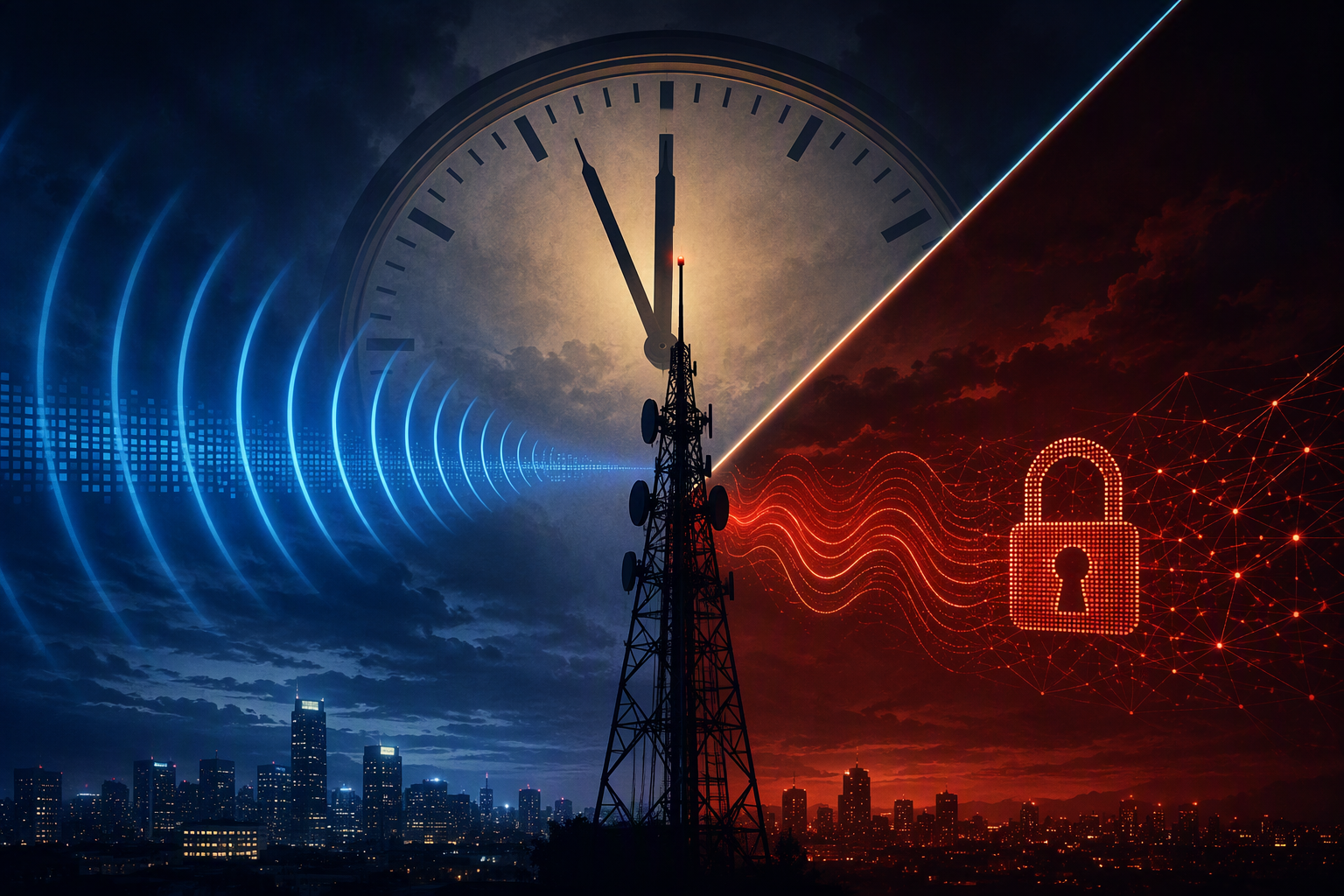
August 6, 2026. In less than a week, the Carolina Panthers and Arizona Cardinals will take the field in Canton, Ohio, for the Hall of Fame Game — the unofficial start of the NFL season. By September 9, when the defending Super Bowl champion Seattle Seahawks host the season opener on NBC, millions of Americans will have made a single purchase that did not exist in their homes a month earlier: an indoor TV Antenna. The NFL season is the single largest recurring demand driver for the antenna industry, and the countdown has already begun.
2026 NFL Season — Key Dates for Antenna BuyersAugust 6 — Hall of Fame Game: Panthers vs Cardinals, 8PM ET on NBC/ESPN
August 13-17 — Preseason Week 1, full slate begins
September 9 — Regular season kickoff: Seahawks host, 8:20PM ET on NBC
September 13 — Week 1 Sunday: full afternoon slate on CBS and FOX
November 26 — Thanksgiving tripleheader (CBS, FOX, NBC)
December 19 — Week 15 Saturday doubleheader (CBS + FOX)
February 7, 2027 — Super Bowl LXI at SoFi Stadium, Los Angeles
Why August Is the Antenna Industry's Biggest Month
Every year, without fail, indoor TV Antenna sales spike in August. The pattern is visible in Amazon best-seller rankings, retail inventory data, and search trends: "Indoor TV Antenna," "how to watch football without cable," and "OTA antenna NFL" surge in late July, peak in late August, and sustain through September. The reason is simple arithmetic. A $25 indoor antenna delivers every NFL game broadcast on CBS, FOX, and NBC — Sunday afternoon AFC games, Sunday afternoon NFC games, Sunday Night Football, Thanksgiving games, playoff games, and the Super Bowl — in uncompressed high definition, with zero monthly cost. Compare that to YouTube TV at $83 per month for the same channels, or DirecTV Stream at $80-plus, and the antenna pays for itself before the first commercial break of Week 1.
The 2026 season amplifies this dynamic. Cord-cutting has now reached 65.6 percent of US households — only 34.4 percent still subscribe to traditional pay-TV, according to Adwave's Q1 2026 analysis of Leichtman Research Group data. S&P Global projects the rate of cord-cutting will moderate to 3.7 percent in 2026, but not because consumers are returning to cable — because the remaining subscriber base is shrinking so fast that the absolute number of departures is mathematically capped. Every former cable subscriber is a potential antenna customer, and the NFL season is the single most powerful conversion event in American television.
The seasonal sales data tells the story clearly. Antenna retailers and manufacturers report that August and September account for 25 to 35 percent of annual indoor antenna revenue — more than the holiday shopping season, more than the Super Bowl spike in January, more than any other sustained period. The World Cup in June and July 2026 created an unprecedented mid-year demand surge, but the NFL season is the reliable, recurring, predictable demand engine that the antenna industry has depended on for years. The World Cup was a bonus. The NFL is the baseline.
Free vs. Paid: What NFL Games Require a Subscription in 2026
The NFL's broadcast landscape has become more fragmented than ever, and the confusion benefits the antenna industry. Here is what consumers need to know for the 2026 season.
Free over the air with an antenna: Every Sunday afternoon game on CBS (AFC) and FOX (NFC). Every Sunday Night Football game on NBC. The Thanksgiving tripleheader. The Week 15 Saturday doubleheader. The entire playoffs, including the conference championships. And Super Bowl LXI on February 7, 2027 — broadcast free on FOX from SoFi Stadium in Los Angeles. These are the most-watched football games of the year, and every single one is available with a $25 antenna and no subscription.
Requires a paid subscription: Thursday Night Football is exclusive to Amazon Prime Video. At least one regular-season game will stream exclusively on Peacock (NBCUniversal's platform). Netflix will carry exclusive Christmas Day games. ESPN's Monday Night Football — while broadcast over the air in the participating teams' home markets — requires a cable, satellite, or streaming subscription for out-of-market viewers. NFL Network will carry seven regular-season games, five of them international matchups in the early morning window. The NFL Sunday Ticket, which provides access to every out-of-market Sunday afternoon game, is exclusive to YouTube TV and YouTube Primetime Channels at a reported $349 to $449 for the season.
The result is a two-tier football-watching landscape: the antenna tier, which is free and covers the vast majority of the most important games, and the subscription tier, which covers the niche and exclusive windows. For the casual fan who wants to watch their local team on Sunday afternoons, Sunday Night Football, and the playoffs, the antenna tier is complete. For the fantasy football enthusiast or out-of-market fan who wants access to every game in every time slot, the subscription tier is the only option — at a cost that can exceed $1,000 for the season when all required subscriptions are added together.
"The NFL is caught between its broadcast heritage and its streaming future. Every game moved to a paid platform is a gift to the antenna industry — because it makes the free games more valuable, not less."
The Consumer Discovery Moment: "Wait, I Can Watch This for Free?"
The NFL antenna discovery process follows a predictable pattern that repeats millions of times every August. A consumer who cut the cord years ago is planning their football-watching setup for the upcoming season. They Google "how to watch NFL without cable." They discover that CBS, FOX, and NBC broadcast games over the air. They realize an antenna costs $25. They order one on Amazon, or buy one at Best Buy, Walmart, or Target. They plug it in, run a channel scan, and watch football. The entire conversion funnel — from awareness to purchase to setup — can happen in under 24 hours, and it peaks in the two weeks before the regular season.
This year, the discovery moment is being amplified by growing consumer frustration with NFL games moving to streaming platforms. There is "growing controversy over NFL games increasingly appearing on pay programming, costing fans big bucks," as Baltimore's FOX affiliate reported earlier this year. Social media threads on Reddit's r/cordcutters and r/nfl are filled with fans running the numbers on what it costs to watch every game legally. The typical calculation: YouTube TV at $83 per month for five months ($415), Amazon Prime at $14.99 per month, Peacock at $13.99, and Netflix at $26.99 for the Christmas games — totaling well over $500 for the season. The $25 antenna that delivers 80 percent of the games for free looks, in this context, less like a retro accessory and more like the only financially rational decision.
The Retail Response: Antennas Moving to Endcap Displays
Retailers have learned to capitalize on the NFL antenna rush. Best Buy, Walmart, and Target now stock antennas in seasonal endcap displays during August and September, often positioned alongside streaming devices and television accessories rather than buried in the legacy electronics aisle. Point-of-sale signage increasingly references sports — "Watch Sunday Football Free" — alongside traditional cord-cutting messaging. Amazon's algorithm surfaces antennas prominently in late-summer searches for "NFL streaming," "how to watch football," and related terms.
The packaging itself is evolving. Antenna boxes that once emphasized "Digital HDTV Antenna" and "free local channels" in generic terms now feature sports-specific messaging: "Watch NFL, NBA, MLB Free," with football imagery and references to CBS, FOX, and NBC. This seasonal marketing shift reflects the reality of consumer purchase motivation: people do not buy antennas in August for PBS or The CW. They buy them for football. The local news and network programming that the antenna also delivers are a bonus, but the trigger event is the NFL schedule. Every antenna manufacturer and retailer in the country knows this, and the marketing reflects it.
What the 2026 Season Means for the Antenna Industry
The 2026 NFL season arrives at a uniquely favorable moment for antenna adoption. The World Cup in June and July educated tens of millions of consumers about the existence and simplicity of over-the-air television. The streaming industry's price escalation — YouTube TV at $83, Hulu Live at $90, Netflix Premium at $26.99 — has made the cost of a full subscription football package prohibitive for a growing share of households. Cord-cutting has reached a saturation point where the remaining pay-TV subscribers are disproportionately older and less tech-comfortable, while the fast-growing cord-never and cord-cutter populations are precisely the demographics most likely to purchase an antenna for football.
The antenna-plus-streaming hybrid model — free broadcast football from an antenna, supplemented by a single streaming subscription for the few games that require it — is the cost-optimal configuration for most NFL fans. An antenna ($25 one-time) plus Amazon Prime ($14.99 per month, or $139 annually) covers every Thursday, Sunday afternoon, Sunday night, and playoff game, plus the Super Bowl — missing only the Peacock exclusive, the Netflix Christmas games, and out-of-market Sunday afternoon games. Total seasonal cost: approximately $100, versus $500-plus for a full streaming subscription stack. The mathematics are not ambiguous.
The 2026 season will be the first full NFL campaign since the World Cup created the largest single antenna-awareness event in the category's history. The installed base of antenna-equipped households is larger than it has ever been entering an NFL season. The streaming industry's price trajectory is steeper than it has ever been. And the consumer's mental model — "some football costs money, but most football is free if you have an antenna" — is clearer than it has ever been, paradoxically sharpened by the frustration of watching games migrate to paid platforms. The antenna industry enters August 2026 with the strongest tailwinds it has ever had heading into a football season. The only question is how many households will buy their first antenna between now and September 9.

 Español
 Portugues
 Pусский
 Français
 Deutsch
 日本語
日本語
 한국어
한국어
 العربية
 Italiano
 Nederlands
 Ελληνικά
 Svenska
 Polski
 ไทย
ไทย
 Türk dili
 हिन्दी
 Indonesia
 Melayu
 Tiếng Việt
 中文
中文
 dansk
dansk
 Magyar
 қазақ
қазақ
 বাংলা
বাংলা
 עִברִית
 čeština
 Soomaali
 မြန်မာ
 فارسی
فارسی
 українська
 norsk
norsk
 Gaeilge
 беларускі
 Română
 ພາສາລາວ
 Filipino
 lietuvių
 Cymraeg
 македонски
 Suomalainen
 slovenský
 o'zbek
 اردو
اردو
 հայերեն
 Igbo
Igbo
 български
 سنڌي
سنڌي
 Shona
Shona
 සිංහල
සිංහල
 Hrvatski
 íslenskur
 galego
 català
 Zulu South Africa
 Afrikaans isiXhosa
 ಕನ್ನಡ
ಕನ್ನಡ
 lëtzebuergesch
 Indonésia Sunda
 Кыргызча
 тоҷикӣ
 Србија
 Twi
Twi
 Hawaii
 Cebu
Cebu
 नेपाल
नेपाल
 euskara
 frissi
 יידיש
יידיש
 latvija
 slovenija
 kiswahili
 ਪੰਜਾਬ
ਪੰਜਾਬ
 پښتو
پښتو
 საქართველოს
 hua moni
 bosna
bosna
 Kreyòl ayisyen
 Eesti
Eesti
 Gàidhlig na h-Alba
 Samoa
Samoa
 Монгол
 Azərbaycan
 አማራ
አማራ
 Shqipëria
 Malagasy
 Malta
Malta
 ខ្មែរ
ខ្មែរ
 Chicheva
 中文(繁體)
 ଓଡିଆ
ଓଡିଆ
 Setswana
 Afrikaans
 Aymara
 Башҡорт
 Türkmenler
 ትግሪኛ
ትግሪኛ
 Afaan Oromoo
 অসমীয়া
 Kinyarwanda
 Ilocano
 Wolof
Wolof
 अवधी
अवधी
 Oluganda
 Bikol
Bikol
 Fulɓe
Fulɓe
 Kikongo
 Sango
Sango
 ދިވެހި
 Lingala
 मैथिली
 Tsonga
 ꯃꯦꯏ ꯊꯥꯏ꯫
 brezhoneg
 Furlan
 नेवा
नेवा
 རྫོང་ཁ
 Santali
 Аҧсуа
Аҧсуа
 Нохчийн
 Чӑваш
Чӑваш
 Татар
Татар
 Batak Karo
 دری
دری
 Diura
Diura
 Fengyu
 Eʋegbe
 Iban
Iban
 Fiji
Fiji
 Tonga
Tonga
 Inuktitut
 Nahuatl
 maaya yucatec
 Runasimi
 guarani
 Qafar
Qafar
 Acholi
 Dinka
Dinka
 Luo
Luo
 Lundi
Lundi
 isiNdebele
 Tshivenḓa
 Sesotho sa Leboa
 Sesotho sa Borwa
 Ndumbe
 Papuan Pidgin
 Rromani ćhib
 Thok Nath





 WhatsApp
 phones
Comment
(0)