The economics of home entertainment have flipped. A decade after cord-cutting promised to slash television bills, the cost of replacing cable with streaming services has spiraled so high that millions of consumers are turning to a technology most had written off as obsolete: the indoor TV Antenna. Global indoor antenna revenue has crossed $2.2 billion, and the category is growing faster than at any point since the 2009 digital transition — driven not by technology breakthroughs, but by simple math.
The Numbers at a Glance$83/month — YouTube TV (up from $35 at launch)
$90/month — Hulu + Live TV (up $7 in 2026 alone)
$24.99/month — Netflix standard plan (up from $12.99 in 2020)
$2.23 Billion — Global indoor TV Antenna market value (WiseGuy Reports, 2025)
6.7% CAGR — TV antenna market growth rate through 2033 (Fortune Business Insights)
68.85% — Indoor Antennas' share of total TV antenna sales in 2026
66% — US households without traditional pay-TV (Q1 2026, Adwave)
The Streaming Math That Changed Everything
When YouTube TV launched in 2017 at $35 per month, the pitch was simple: get live television without cable, for a fraction of the price. Nearly a decade later, YouTube TV costs $83 per month — a 137 percent increase. Hulu's live TV service now runs $90 per month after a $7 hike earlier this year. DirecTV Stream and Fubo have followed suit, each crossing the $80 threshold. When you add the cost of home internet — typically $50 to $70 per month — the all-in price of "cutting the cord" with a full live TV streaming replacement now exceeds what many households were paying for cable.
At the same time, on-demand streaming has become a death by a thousand price hikes. Netflix has raised its standard plan three times since 2020, from $12.99 to $24.99 — a 92 percent increase. Disney+ launched at $6.99 in 2019; the ad-free tier is now $13.99. Max (formerly HBO Max) sits at $20.99. The average household subscribing to four streaming services now pays north of $70 per month for on-demand content alone, before any live television. Layer on a live TV streaming service and internet, and the monthly total can easily cross $200.
"The promise of cord-cutting was that you'd pay less. For a growing number of households, that promise has been broken. An indoor antenna is the correction — free, uncompressed, and forever."
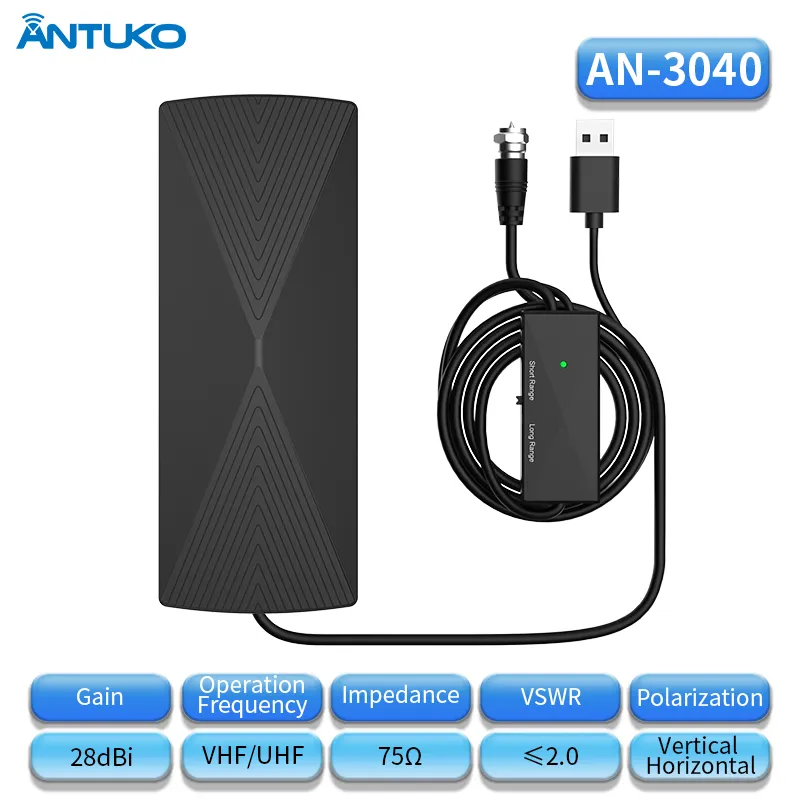
Against this backdrop, a $25 Indoor TV Antenna that delivers 50-plus free HD channels with no monthly fee, no contract, and no price increase looks less like a retro curiosesity and more like financial common sense. Consumers are running the numbers and reaching the same conclusion: dropping a live TV streaming subscription in favor of an antenna plus one or two on-demand services saves between $600 and $1,000 per year. The antenna pays for itself in under two weeks.
Market Data Confirms the Shift
Multiple independent research firms have documented the indoor antenna market's acceleration. WiseGuy Reports pegged the global indoor TV antenna market at $2.23 billion in 2025, projecting growth to $3.50 billion by 2035 at a compound annual growth rate of 4.6 percent. Verified Market Reports estimates the US indoor antenna market alone at $1.3 billion in 2025, heading toward $2.0 billion by 2033 — a 6.2 percent CAGR. Fortune Business Insights reports that indoor antennas now dominate the category with a 68.85 percent market share, and that digital-specific antennas account for 77.69 percent of all TV antenna sales.
Consumer Reports entered the conversation in mid-2026 with updated indoor antenna testing, an event that reliably drives retail interest. The publication's testers found that even budget indoor models priced under $20 can reliably deliver 30 to 50 channels in suburban locationss — a finding that undercuts one of the persistent myths about indoor antennas, namely that you need to spend $60 or more for usable reception. Quartz, PCMag, The New York Times Wirecutter, and CNET have all published or updated their indoor antenna buying guides in 2026, reflecting sustained editorial and consumer interest in the category.
Retail data tells a consistent story. Amazon's best-seller rankings for TV Antennas show robust, sustained demand that tracks predictably with external events: regional sports calendars, major live broadcasts like the Super Bowl and the Olympics, and — tellingly — the quarterly cycle of streaming price hike announcements. Sales volumes spike measurably in the weeks following each new round of streaming subscription increases. Best Buy, Walmart, and Target have all expanded their in-store antenna selections, moving the category from a dusty corner of the accessories aisle to more prominent placement — in some stores, alongside streaming devices and smart home displays.
Cord-Cutting Has Reached a Tipping Point
The consumer migration away from traditional pay-TV has crossed a symbolic threshold. By the first quarter of 2026, approximately 66 percent of US households no longer subscribed to traditional cable or satellite television, according to Adwave's analysis of Leichtman Research Group data. Pay-TV providers shed an estimated 5 million subscribers in 2025 alone. S&P Global projects the rate of cord-cutting will moderate slightly — to a 3.7 percent decline in 2026 and 3.5 percent in 2027 — but only because the remaining subscriber base is shrinking so fast that the absolute number of departures is mathematically capped.
Critically, the cord-cutting population is no longer just the early adopter demographic that drove the trend's first wave. It now includes older households, families in suburban and rural areas, and lower-income consumers for whom a $200 monthly entertainment bill is genuinely unaffordable. For these households, the indoor antenna is not a supplement to streaming — it is the primary television source, supplemented by one ad-supported free streaming service. The antenna-plus-Freevee-or-Pluto-TV combination produces a monthly television cost of zero dollars beyond the one-time antenna purchase.
The streaming industry's response to cord-cutting has been, paradoxically, to accelerate it. As media companies consolidate — Disney integrating Hulu into its ecosystem, Warner Bros. Discovery bundling Max with other services, Comcast restructuring Peacock — the fragmentation that once drove consumers to subscribe to multiple services is being replaced by re-bundling that increasingly resembles the cable model. Prices rise, the number of separate bills shrinks, and the consumer experience converges toward the very thing cord-cutting was supposed to escape. An indoor antenna, by contrast, is the one piece of the television ecosystem whose business model has not changed in decades: broadcasters transmit free signals, and an antenna receives them. No login, no subscription, no Terms of Service update that changes what you pay.
The ATSC 3.0 DRM Fight and What It Means for Antenna Users
While market demand surges, a regulatory and technology battle is unfolding in Washington that will shape the indoor antenna market's long-term trajectory. At issue is ATSC 3.0 — the NextGen TV standard that promises 4K broadcasts, immersive audio, and more robust indoor reception — and, specifically, whether broadcasters can encrypt those signals using digital rights management that would require an internet-connected tuner and a decryption key handshake to display free over-the-air programming.
The FCC has been weighing this question since late 2025. Broadcaster groups argue that DRM encryption is necessary to protect their content from unauthorized redistribution and to satisfy the licensing requirements of major sports leagues and Hollywood studioses. Consumer advocacy groups, independent technologists, and a vocal segment of the OTA enthusiast community argue that DRM fundamentally breaks the social contract of free over-the-air television: if you need an internet connection and a license negotiation to watch a broadcast signal, it is no longer "free TV" in any meaningful sense.
In February 2026, a coalition of DRM opponents — including the Lon.TV technology channel, the American Television Alliance, and several public interest groups — formally submitted comments to the FCC arguing that encrypted broadcasts should not require any special equipment or authentication beyond a standard ATSC 3.0 tuner. Madeleine Noland, president of ATSC, separately clarified to the Commission that the ATSC 3.0 standard itself does not require broadcasters to encrypt signals or use any specific DRM system — the encryption push is a broadcaster business decision, not a technical mandate of the standard.
The outcome of this regulatory proceeding will have concrete consequences for the indoor antenna market. If the FCC permits unrestricted DRM encryption, consumers may find that some ATSC 3.0 channels require an active internet connection and compatible hardware to view — undermining one of the antenna's core value propositions, which is independence from internet infrastructure. If the FCC restricts DRM or mandates that encrypted broadcasts remain decodable by any standards-compliant tuner without authentication, ATSC 3.0's improved indoor reception characteristics will flow directly to consumers as an unmitigated benefit. The Commission has not set a timeline for a final decision.
Brazil's formal adoption of ATSC 3.0 technologies in August 2025 — branded as DTV+ — adds an international dimension to the standard's development. Brazil's implementation choices, including its approach to encryption, will influence other countries evalsuating next-generation broadcast standards and will affect the global addressable market for ATSC 3.0-compatible indoor antennas.
Product Innovation: The Indoor Antenna Gets Smarter
The indoor antenna category in 2026 bears little resemblance to the commodity products that dominated shelves five years ago. Manufacturers have invested in genuine technical differentiation, responding to real-world reception challenges rather than adding cosmetic features.
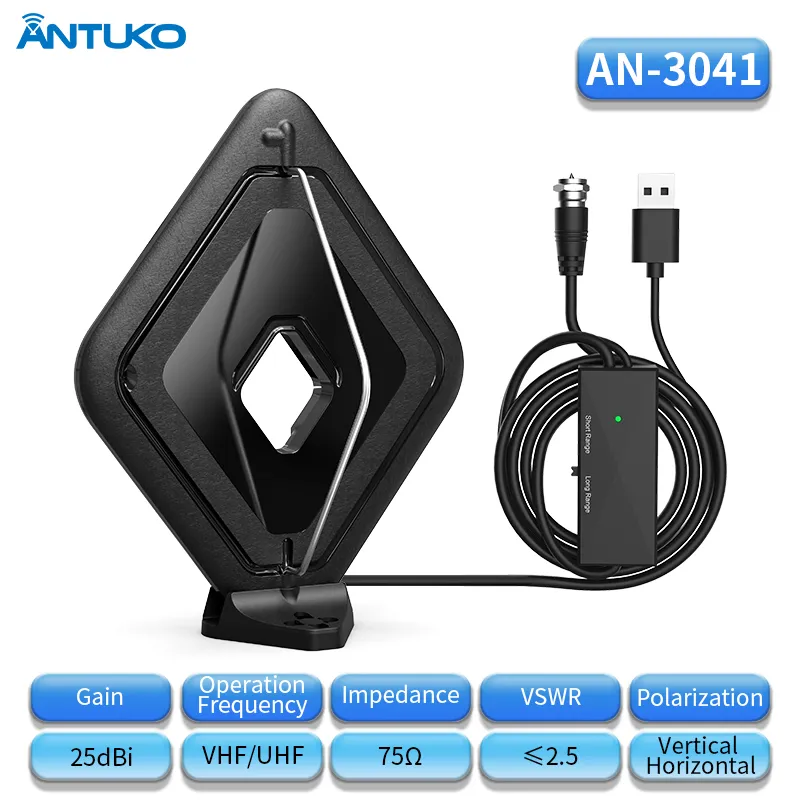
Integrated 5G filtering has transitioned from a premium differentiator to a near-universal standard feature. As cellular networks densify — particularly in urban and suburban areas — interference from 4G and 5G base stations operating in frequency bands immediately above the UHF television spectrum has become a widespread problem. Modern indoor antennas now incorporate band-pass filters that attenuate cellular signals above 698 MHz while preserving television broadcast frequencies. What was once a $10 separate accessory is now built into the antenna's amplifier circuit.
Automatic gain control addresses one of the most persistent complaints about Amplified Indoor Antennas: the tendency to overload TV tuners in strong-signal areas. Earlier amplified models applied a fixed 20–30 dB of gain regardless of signal conditions, often making reception worse than no amplification at all. Current-generation amplified antennas sense the incoming signal level and adjust gain dynamically, or offer a manual gain dial with enough granularity for users to fine-tune amplification to their exact locations. Premium models include an amplifier bypass mode for strong-signal environments where amplification is counterproductive.
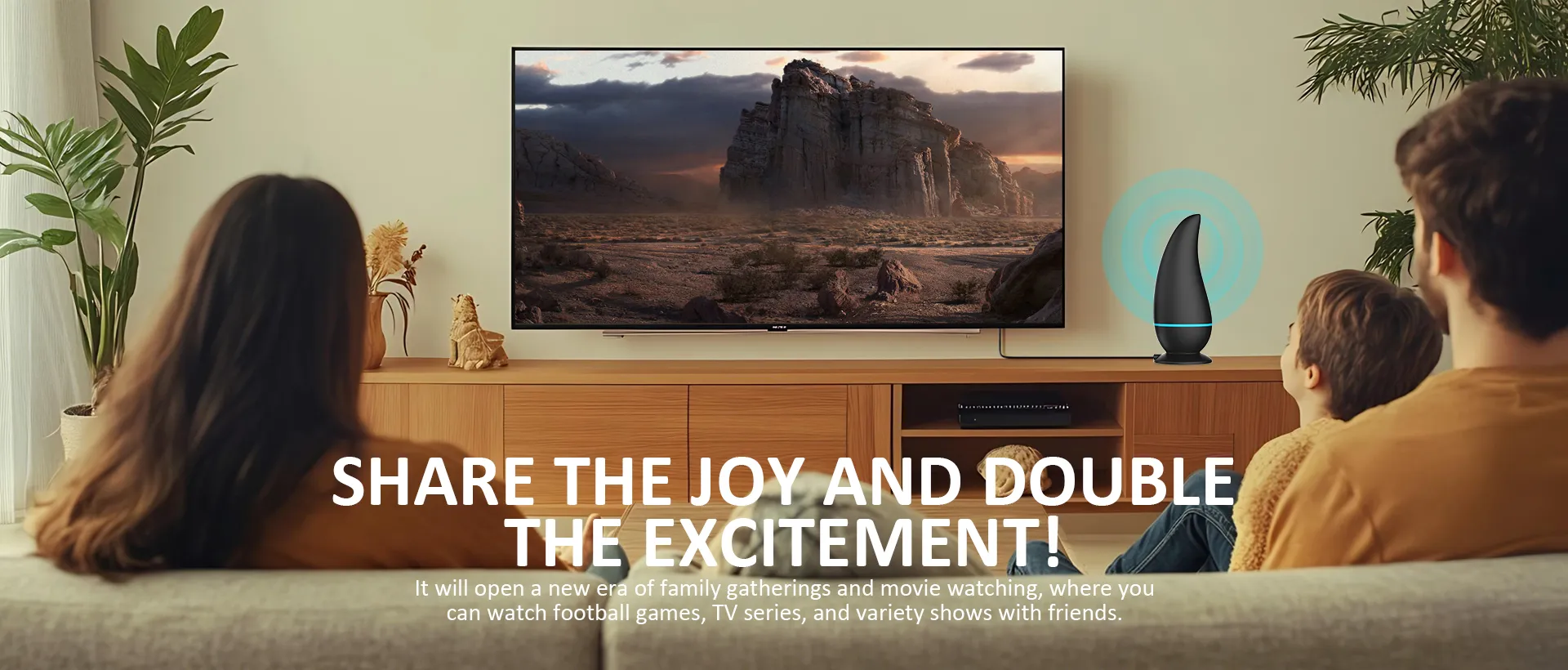
Networked tuner platforms represent the most significant architectural shift in how consumers interact with over-the-air television. These devices combine an indoor antenna element with a multi-tuner ATSC receiver and a Wi-Fi transmitter, streaming live OTA channels to every screen in the home — smart TVs, phoness, tablets, and computers — through a unified app interface. This decouples antenna placement from TV placement entirely: the antenna lives wherever reception is best, while television viewing happens wherever is convenient. The approach also replaces coaxial cable runs with Wi-Fi, solving the multi-TV distribution problem that has historically limited whole-home antenna adoption.
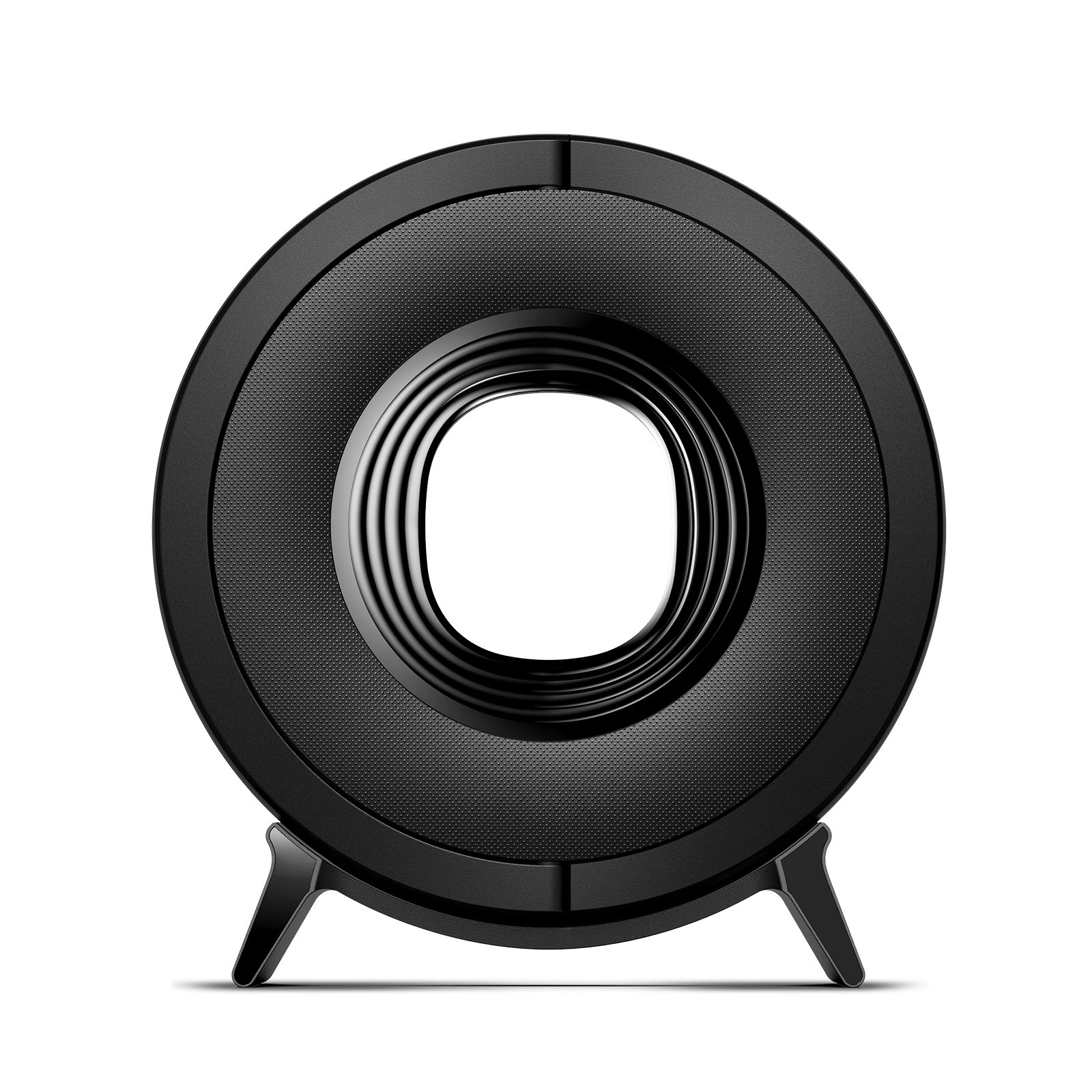
Form factor experimentation is expanding the market beyond the flat black rectangle. Soundbar-shaped antennas that integrate into the entertainment center, cylindrical designs with magnetic bases for flexible positioning, and ultra-thin window-adhesive models that virtually disappear when mounted are all now available at mainstream retail. These designs address the aesthetic objections that have kept some consumers — particularly in design-conscious living spaces — from considering an indoor antenna.
Regional Dynamics: North America Leads, But the Map Is Shifting
North America remains the dominant market for indoor TV antennas, accounting for roughly 35 percent of global revenue according to Fortune Business Insights. The factors driving US demand — high cord-cutting rates, dense broadcast tower infrastructure, streaming price fatigue, and the ATSC 3.0 transition — are more intense and more concurrent in the United States than in any other region. The US indoor antenna market alone is projected to reach $2.0 billion by 2033, per Verified Market Reports.
Europe presents a more mature but stable market. Countries with established DVB-T2 infrastructure — the United Kingdom, Germany, Italy, France — have long-standing antenna cultures where indoor units are a normalized consumer electronics category. Growth in these markets is driven by replacement cycles and incremental technology improvements rather than first-time adoption. Eastern European markets, where digital switchovers are more recent, offer higher growth potential as consumers acquire DVB-T2-compatible indoor antennas for the first time.
Asia-Pacific is the region with the greatest long-term growth potential and the most complex market dynamics. Japan's ISDB-T ecosystem supports a stable antenna market. China's digital television mandates have driven antenna adoption, though the market skews toward basic, low-cost indoor units. India's massive population and ongoing digital transition represent an enormous addressable market, but severe price sensitivity and strong satellite TV competition — Tata Sky, Dish TV, and others offer prepaid plans for a few dollars per month — limit the premium indoor antenna segment. Southeast Asian markets including Vietnam, Indonesia, and the Philippines are seeing growing demand as broadcast infrastructure matures and urban populations expand within broadcast tower range.
Brazil's ATSC 3.0 adoption creates a significant new regional market in Latin America with decade-long growth potential as the country's broadcast infrastructure transitions to the new standard. The Middle East and Africa remain nascent markets with growth tied to digital transition timelines and urbanization rates.
What to Watch in the Second Half of 2026
Several developments in the coming months will shape the indoor antenna market's trajectory into 2027.
The FCC's ATSC 3.0 DRM ruling — whenever it arrives — is the single most consequential regulatory event for the category. A ruling that restricts encryption or mandates DRM-free reception would accelerate consumer adoption; a ruling that permits unrestricted broadcaster encryption would introduce consumer confusion and potentially dampen demand, particularly among the less technically inclined segment of the market.
Additional streaming price increases are widely expected. Disney CEO Bob Iger has signaled that further Disney+ and Hulu pricing adjustments are under consideration. Netflix's ad-supported tier expansion suggests the company sees price sensitivity in its subscriber base but has not ruled out additional increases on premium tiers. Each new round of streaming price hikes functions as an unplanned marketing campaign for indoor antennas, and the frequency of these announcements has been increasing.
The 2026 NFL season, beginning in September, is the single largest annual demand driver for indoor antennas. Football broadcasts on CBS, NBC, and FOX are among the most-watched television events in the United States, and they are available free over the air. Antenna sales historically spike in the weeks leading into the NFL regular season, and the growing population of cord-cutters and cord-nevers — many of whom have never owned an antenna — represents an expanding market for seasonal first-time purchasers.
Retail channel expansion is making indoor antennas more discoverable. The category is migrating from online-only to omnichannel: in-store placement at major retailers, improved packaging that communicates the value proposition more clearly, and point-of-sale displays that position the antenna alongside streaming devices rather than in the legacy accessories section. This retail visibility, combined with the tailwind of streaming price fatigue, is expanding the addressable consumer base beyond the early adopter cord-cutter demographic.
Conclusion: The $25 Antenna vs. The $200 Monthly Bill
The indoor TV antenna market in mid-2026 is being shaped by forces that have nothing to do with antenna technology and everything to do with the economics of home entertainment. Every streaming price increase, every cable bill that crosses a psychological threshold, and every household that does the arithmetic and realizes they are paying for channels they do not watch pushes another consumer toward a product that costs less than a single month of YouTube TV and lasts for years.
Consumer Reports' recent testing confirmed what antenna users have known for years: in most of the United States, a well-placed indoor antenna delivers dozens of crystal-clear HD channels — including all major networks, live sports, and local news — for free. The antenna does not require an internet connection. It does not buffer. It does not compress the signal into visible artifacts during fast-motion sports. And it never sends an email announcing a price increase.
The indoor antenna's unlikely second act — from forgotten technology to growth category — is less a story about antennas than it is a story about the streaming industry's failure to deliver on its founding promise of affordable television. As long as that promise remains unfulfilled, the indoor antenna will continue to thrive.

 Español
 Portugues
 Pусский
 Français
 Deutsch
 日本語
日本語
 한국어
한국어
 العربية
 Italiano
 Nederlands
 Ελληνικά
 Svenska
 Polski
 ไทย
ไทย
 Türk dili
 हिन्दी
 Indonesia
 Melayu
 Tiếng Việt
 中文
中文
 dansk
dansk
 Magyar
 қазақ
қазақ
 বাংলা
বাংলা
 עִברִית
 čeština
 Soomaali
 မြန်မာ
 فارسی
فارسی
 українська
 norsk
norsk
 Gaeilge
 беларускі
 Română
 ພາສາລາວ
 Filipino
 lietuvių
 Cymraeg
 македонски
 Suomalainen
 slovenský
 o'zbek
 اردو
اردو
 հայերեն
 Igbo
Igbo
 български
 سنڌي
سنڌي
 Shona
Shona
 සිංහල
සිංහල
 Hrvatski
 íslenskur
 galego
 català
 Zulu South Africa
 Afrikaans isiXhosa
 ಕನ್ನಡ
ಕನ್ನಡ
 lëtzebuergesch
 Indonésia Sunda
 Кыргызча
 тоҷикӣ
 Србија
 Twi
Twi
 Hawaii
 Cebu
Cebu
 नेपाल
नेपाल
 euskara
 frissi
 יידיש
יידיש
 latvija
 slovenija
 kiswahili
 ਪੰਜਾਬ
ਪੰਜਾਬ
 پښتو
پښتو
 საქართველოს
 hua moni
 bosna
bosna
 Kreyòl ayisyen
 Eesti
Eesti
 Gàidhlig na h-Alba
 Samoa
Samoa
 Монгол
 Azərbaycan
 አማራ
አማራ
 Shqipëria
 Malagasy
 Malta
Malta
 ខ្មែរ
ខ្មែរ
 Chicheva
 中文(繁體)
 ଓଡିଆ
ଓଡିଆ
 Setswana
 Afrikaans
 Aymara
 Башҡорт
 Türkmenler
 ትግሪኛ
ትግሪኛ
 Afaan Oromoo
 অসমীয়া
 Kinyarwanda
 Ilocano
 Wolof
Wolof
 अवधी
अवधी
 Oluganda
 Bikol
Bikol
 Fulɓe
Fulɓe
 Kikongo
 Sango
Sango
 ދިވެހި
 Lingala
 मैथिली
 Tsonga
 ꯃꯦꯏ ꯊꯥꯏ꯫
 brezhoneg
 Furlan
 नेवा
नेवा
 རྫོང་ཁ
 Santali
 Аҧсуа
Аҧсуа
 Нохчийн
 Чӑваш
Чӑваш
 Татар
Татар
 Batak Karo
 دری
دری
 Diura
Diura
 Fengyu
 Eʋegbe
 Iban
Iban
 Fiji
Fiji
 Tonga
Tonga
 Inuktitut
 Nahuatl
 maaya yucatec
 Runasimi
 guarani
 Qafar
Qafar
 Acholi
 Dinka
Dinka
 Luo
Luo
 Lundi
Lundi
 isiNdebele
 Tshivenḓa
 Sesotho sa Leboa
 Sesotho sa Borwa
 Ndumbe
 Papuan Pidgin
 Rromani ćhib
 Thok Nath





 WhatsApp
 phones
Comment
(0)