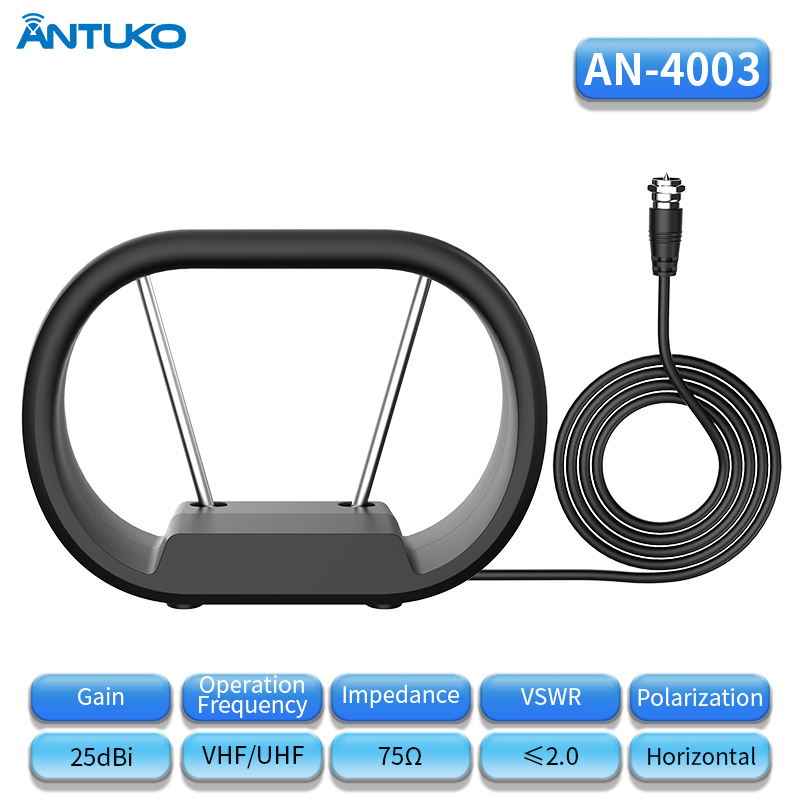

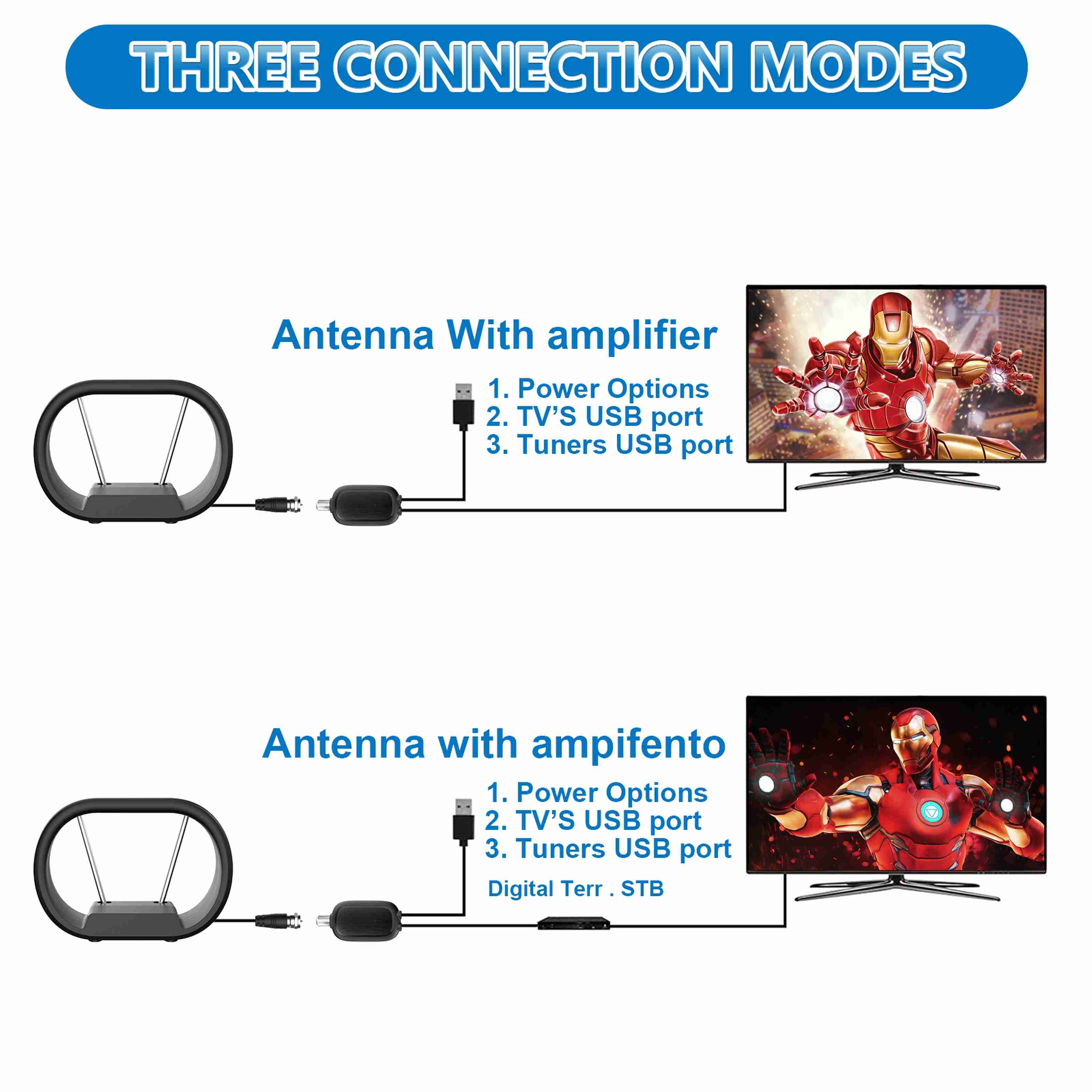
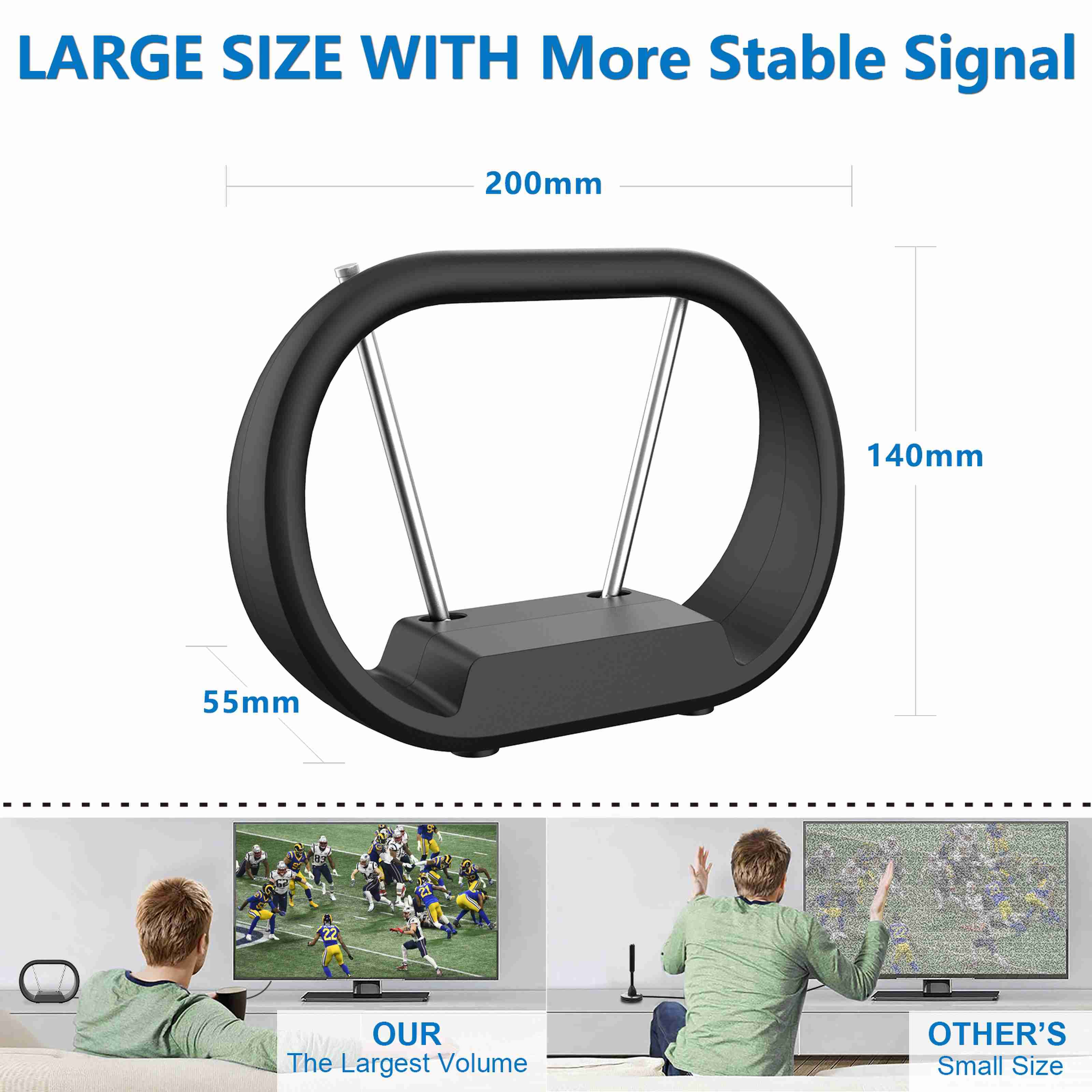
The global indoor TV Antenna market is experiencing its strongest growth in decades, propelled by an unprecedented wave of cord-cutting, rising streaming subscription costs, and the accelerating rollout of ATSC 3.0 NextGen TV across North America. Once considered a relic of the analog era, the humble indoor antenna has re-emerged as a mainstream consumer electronics category — and manufacturers are racing to meet demand with smarter, more capable designs.
Market at a Glance — 2026 A Market Transformed by Cord-Cutting
The relationship between pay-TV decline and antenna adoption is direct and accelerating. By the first quarter of 2026, sixty-six percent of US households had abandoned traditional cable and satellite television — a threshold that seemed distant just five years ago. In 2025 alone, American pay-TV providers shed five million subscribers, continuing a decade-long exodus that shows no signs of reversing.
At the same time, the cost of replacing cable with streaming services has climbed sharply. The average American household now subscribes to four or more streaming platforms, with monthly bills that increasingly resemble the cable bundles they were meant to replace. Disney+, Netflix, Max, Hulu, and Amazon Prime Video have each implemented multiple price increases since 2023. According to industry analysts, the average combined streaming bill for a household with four services now exceeds $70 per month — within striking distance of entry-level cable packages from just a few years ago.
"Streaming fatigue is real. Consumers are rediscovering that broadcast television — delivered free over the air — fills a gap that no subscription service can match: zero monthly cost, live local news, and major sports."
This "streaming fatigue" has become a primary driver of indoor antenna sales. Unlike an outdoor rooftop installation — which requires mounting hardware, cable routing, and often professional help — an indoor antenna is a plug-and-play purchase that can be set up in minutes. For apartment dwellers, renters, and anyone unwilling to climb onto a roof, the indoor antenna is the only practical path to free over-the-air television. Fortune Business Insights reports that indoor antennas are projected to command 68.85 percent of the total TV antenna market in 2026, up from roughly 60 percent five years earlier.
The Numbers Behind the Growth
Multiple independent market research firms have published updated estimates that collectively paint a picture of sustained, broad-based expansion. WiseGuy Reports valued the global Indoor TV Antenna market at $2.23 billion in 2025 and projects growth to $3.50 billion by 2035, representing a compound annual growth rate of 4.6 percent. The Insight Partners offers a more bullish assessment, pegging the broader indoor antenna market — which includes indoor TV Antennas alongside Wi-Fi and cellular indoor antennas — at $1.31 billion in 2025 with a projected $2.37 billion by 2034, reflecting a 7.69 percent CAGR.
DataIntelo's analysis of the Digital tv antenna segment specifically estimates a 2025 market value of $2.8 billion, forecasting $4.6 billion by 2034 at a 5.6 percent CAGR. Fortune Business Insights, focusing on the total TV antenna category, reports $575.8 million in 2025 with growth to $808.4 million by 2034. The variance between these estimates reflects different market definitions — some include only standalone consumer antennas, while others encompass professional installation, accessories, and related components — but the directional consensus is unmistakable: indoor TV antennas are a growth category.
North America dominates the global market with a 35.4 percent share, according to Fortune Business Insights. The United States remains the single largest national market, driven by the confluence of ATSC 3.0 deployment, high cord-cutting rates, and a dense network of local broadcast stations that makes over-the-air reception viable for the vast majority of the population. Europe and Asia-Pacific represent the next largest regional markets, with DVB-T2 digital switchovers in various countries creating additional demand for compatible indoor antennas.
ATSC 3.0: The Technology Catalyst
The rollout of ATSC 3.0 — branded as NextGen TV — is the most significant technology development affecting the indoor antenna market since the original 2009 digital transition. Unlike ATSC 1.0, which delivered HD video over a standard designed in the 1990s, ATSC 3.0 is built on modern internet protocol infrastructure. It supports 4K Ultra HD resolution with high dynamic range, immersive object-based audio, enhanced emergency alerting, and — critically for indoor antenna users — more robust reception in challenging indoor environments.
The National Association of Broadcasters reports that NextGen TV is now on-air in more than 75 US markets, covering a substantial majority of American households. Brazil formally adopted ATSC 3.0 technologies as the foundation for its next-generation broadcast system — branded DTV+ — in August 2025, adding a major new geographic market for the standard. Further international deployments are under evalsuation in several countries.
ATSC 3.0's improved indoor reception characteristics are particularly relevant for the indoor antenna market. The standard's more advanced modulation and error-correction schemes are designed to maintain reliable decoding at lower signal-to-noise ratioses than ATSC 1.0, effectively extending the usable range of indoor antennas. As more stations transition their primary broadcasts to ATSC 3.0 — and as more television sets ship with built-in ATSC 3.0 tuners — the value proposition of an indoor antenna strengthens measurably. A viewer who could receive 15 channels with an indoor antenna under ATSC 1.0 may receive 25 or more under ATSC 3.0 at the same locations.
Product Innovation: Beyond the Flat Panel
The indoor antenna product landscape in 2026 looks markedly different from the simple flat-panel designs that dominated just five years ago. Manufacturers are investing in genuine technical differentiation, moving beyond cosmetic variations to address the real-world reception challenges that indoor users face.
Integrated 4G/5G LTE filtering has become a standard feature on mid-range and premium indoor antennas. As cellular networks expand into frequency bands immediately adjacent to the UHF television spectrum, interference from nearby cell towers has emerged as a widespread reception problem. Modern indoor antennas now incorporate band-pass filters that block signals above approximately 698 MHz while passing television frequencies with minimal insertion loss. This feature, once available only as a separate inline accessory, is increasingly built directly into the antenna's amplifier circuit.
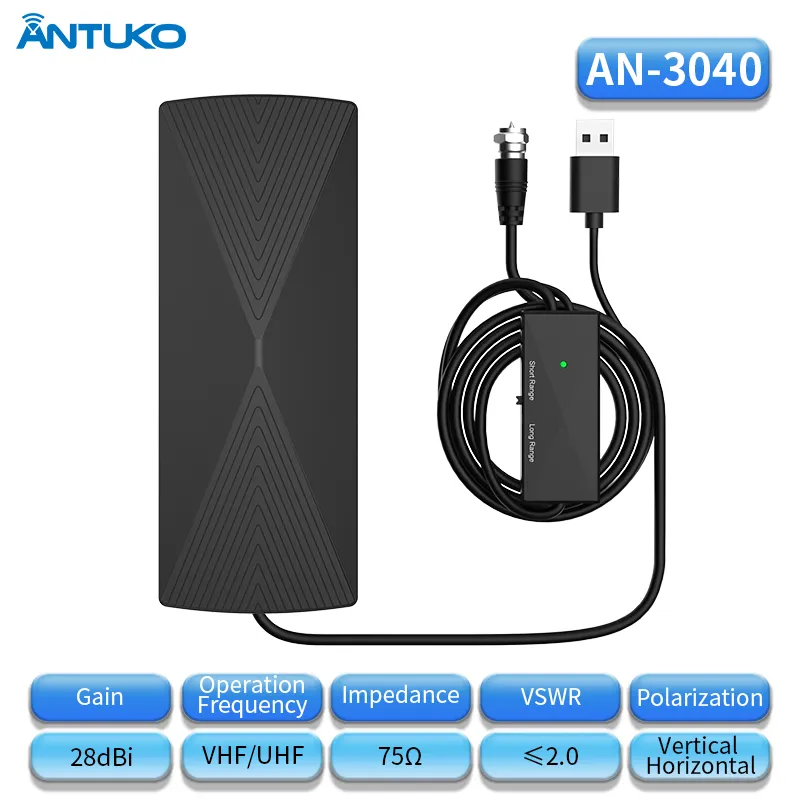
Smart gain control is another notable advancement. Earlier amplified antennas applied a fixed gain — typically 20 to 30 dB — regardless of signal conditions, often overloading TV tuners in strong-signal areas. Newer models feature automatic gain control circuits that adjust amplification dynamically based on received signal strength, or manual gain dials that let users fine-tune the boost level for their specific locations. Some premium models now include dual-mode operation, automatically bypassing the amplifier entirely when signals are already strong enough.
Networked tuner integration represents perhaps the most consequential shift in the indoor antenna category. Rather than connecting directly to a single television, these devices combine an indoor antenna with a multi-tuner ATSC receiver and a Wi-Fi transmitter, streaming live over-the-air channels to every device on the home network — smart TVs, phoness, tablets, and computers. This approach decouples antenna placement from TV placement, allowing the antenna to be positioned in the optimal reception locations — an attic, a high window, or a second-story room — while the television remains wherever is convenient. It also eliminates the need for coaxial cable runs to multiple TVs, solving one of the most persistent pain points of whole-home antenna distribution.
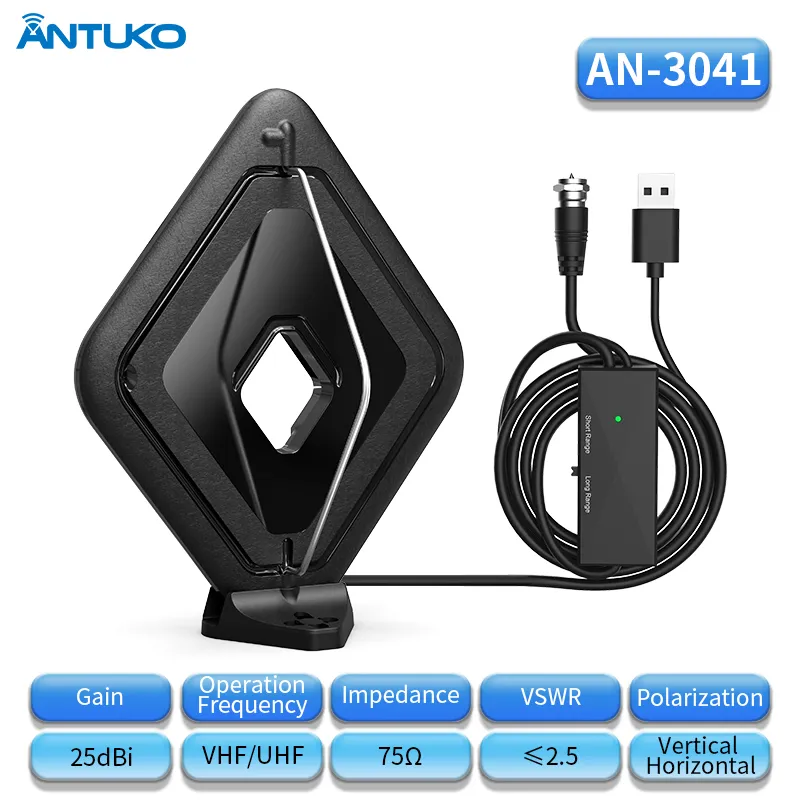
Form factor diversification is expanding the category beyond the ubiquitous black rectangle. Soundbar-shaped antennas that sit inconspicuously below the television, disc-shaped models that adhere directly to windows, and amplified set-top boxes with motorized directional control via remote are all now available. These designs address the aesthetic concerns that have historically deterred some consumers — particularly in design-conscious living spaces where a visible antenna may clash with decor.
Consumer Demographics: Who Is Buying Indoor Antennas
The indoor antenna consumer base has broadened considerably. Industry surveys and retail sales data indicate that three distinct demographic groups are driving current demand.
Cord-cutters and cord-nevers remain the largest segment. These are households that have either cancelled traditional pay-TV service or never subscribed in the first place. They value the indoor antenna as a complement to streaming — covering live sports, local news, and network programming that streaming services either do not offer or offer only at additional cost. For this group, the antenna is not a replacement for streaming but an addition to it, filling a specific content gap at zero recurring cost.
Streaming cost reducers represent a newer and rapidly growing segment. As streaming subscriptions have multiplied and prices have risen, a growing number of households are looking to trim their monthly entertainment spending. An indoor antenna provides access to major network content — NFL games, the evening news, prime-time network shows — that some consumers previously paid for through live TV streaming services like YouTube TV ($72.99/month) or Hulu + Live TV ($82.99/month). Dropping a live TV streaming tier in favor of an antenna plus on-demand streaming can save $600 to $900 annually.
Emergency preparedness and secondary TV users form a third meaningful segment. The indoor antenna serves as a backup when internet service is interrupted — a scenario that has become more salient as extreme weather events increase in frequency. It also provides a zero-cost solution for secondary televisions in bedrooms, kitchens, and guest rooms where a separate streaming device or cable box would represent an unnecessary expense.
Regional Dynamics
North America
The United States and Canada account for the largest share of global indoor antenna revenue. The US market benefits from a uniquely favorable combination: a dense network of free over-the-air broadcasters, the world's highest cord-cutting rate, a population that values live sports and local news, and the ongoing ATSC 3.0 transition that is driving both awareness and hardware upgrades. Canadian consumers face a somewhat different broadcast landscape — fewer stations, particularly in rural areas — but the same cord-cutting economics apply.
Europe
European markets present a mixed picture. Countries that have completed DVB-T2 transitions — the United Kingdom, Germany, Italy, and several others — have established, mature antenna markets where indoor units are a standard consumer electronics category. In these markets, growth is driven by replacement cycles and technology upgrades rather than first-time adoption. Eastern European markets, where digital switchovers are more recent or still in progress, represent higher-growth opportunities as consumers acquire DVB-T2 compatible antennas.
Asia-Pacific
The Asia-Pacific region presents the most diverse landscape. Japan's ISDB-T broadcast standard supports a robust antenna market, though many households already own antennas due to the country's long history of terrestrial broadcasting. China's recent digital television mandates have spurred antenna adoption, though the market is bifurcated between basic indoor units and more sophisticated designs. India's ongoing digital transition, combined with its massive population, represents a potentially enormous market, though price sensitivity and the availability of low-cost satellite alternatives constrain the addressable market for premium indoor antennas. Emerging Southeast Asian markets — Vietnam, Indonesia, the Philippines — are experiencing growing demand as digital broadcasting infrastructure matures.
Latin America, Middle East, and Africa
Brazil's adoption of ATSC 3.0 technologies represents the most significant development in Latin America, with the potential to create a substantial new market for compatible indoor antennas as the country transitions its broadcast infrastructure over the coming years. In the Middle East and Africa, the indoor antenna market remains nascent but growing, driven by digital transition timelines and increasing urbanization that concentrates populations within range of broadcast towers.
Challenges and Headwinds
Despite strong tailwinds, the indoor antenna market faces several constraints that temper growth expectations.
ATSC 3.0 encryption (DRM) is the most significant technology risk. Some broadcasters have implemented digital rights management on ATSC 3.0 signals — meaning that even if an antenna receives the signal, the TV must negotiate a decryption key to display it. This requires both an ATSC 3.0 tuner and an active internet connection for the key exchange. Consumer advocates have raised concerns that DRM-encrypted broadcasts undermine the fundamental value proposition of free over-the-air television, and the FCC is reviewing the practice. The outcome of this regulatory debate will significantly affect ATSC 3.0's value to antenna users.
Consumer education remains a persistent challenge. Many consumers are unaware that free over-the-air television still exists, or they mistakenly believe that an internet connection or subscription is required. The "digital antenna" marketing label — while technically meaningless, as any antenna can receive digital signals — was originally intended to signal compatibility with the post-2009 digital broadcast environment. Over time, this labeling has created confusion, with some consumers believing they need a special "digital" antenna rather than understanding that any UHF/VHF antenna will work. Industry efforts to educate consumers about over-the-air television have been fragmented and inconsistent.
Building construction trends work against indoor antenna performance in meaningful ways. The growing prevalsence of low-E windows with metallic coatings, radiant-barrier roof sheathing in southern climates, metal-frame construction in multi-family buildings, and energy-efficient building envelopes that incorporate foil-faced insulation all reduce the amount of RF signal that penetrates into living spaces. An indoor antenna that works well in a 1980s wood-frame house may perform poorly in a 2020s condominium, and consumers who experience poor results may incorrectly conclude that indoor antennas as a category are ineffective.
Streaming competition for live content is evolving. Services like YouTube TV, Hulu + Live TV, and network-specific apps (Paramount+, Peacock) offer live access to programming that was once only available over the air. While these services carry subscription fees, they eliminate the variability and placement sensitivity of antenna reception. For some consumers, the reliability and convenience of streaming is worth the monthly cost, capping the addressable market for antennas.
2027 and Beyond: What to Watch
Looking ahead, several developments will shape the indoor antenna market's trajectory through the remainder of the decade.
ATSC 3.0 tuner mandates could dramatically expand the installed base of compatible devices. If regulators require ATSC 3.0 tuners in all new televisions — as some industry groups have advocated — the addressable market for indoor antennas that can fully leverage NextGen TV's improved reception and 4K capability would expand rapidly. Consumer Technology Association data indicates that manufacturers are already increasing ATSC 3.0 tuner inclusion voluntarily, suggesting that a mandate may accelerate an existing trend rather than create a new one.
Smart antenna platforms — network-connected tuners with integrated antennas, app-based interfaces, and DVR functionality — are likely to capture an increasing share of indoor antenna revenue. These devices transform the antenna from a passive accessory into an active platform that competes more directly with streaming devices for a place in the entertainment center. Early entrants in this category have demonstrated strong consumer interest, and competition is expected to intensify.
International standardization momentum around ATSC 3.0 could create new regional markets. Brazil's adoption is the most significant, but several other countries are evalsuating next-generation broadcast standards. Each new national adoption of ATSC 3.0 creates a new market for compatible indoor antennas, and the economies of scale from a growing global ATSC 3.0 ecosystem should drive down component costs for manufacturers.
Integration with smart home ecosystems is an emerging frontier. The ability to control antenna positioning, channel selection, and recording via voice assistants or smart home apps would add convenience that could broaden the antenna's appeal beyond the current enthusiast and cost-conscious demographics.
Market Outlook: Steady Growth with Technology Upside
The indoor TV antenna market enters the second half of 2026 in a structurally strong position. The core demand drivers — cord-cutting, streaming cost fatigue, and free access to live sports and local news — are secular trends that show no sign of reversal. The technology catalysts — ATSC 3.0 deployment, integrated 5G filtering, smart gain control, and networked tuner platforms — are improving the product experience in ways that expand the addressable market beyond early adopters.
Consensus analyst estimates point to sustained annual growth of 4.5 to 7.7 percent through 2034–2035, depending on market definition and geographic scope. North America will remain the largest and most profitable regional market, while Asia-Pacific and Latin America offer the highest growth potential as digital broadcast infrastructure matures and consumer awareness increases.
The indoor antenna's unlikely resurgence — from obsolete technology to growth category — reflects a broader re-evalsuation of what consumers actually want from their television experience. As streaming services proliferate, fragment, and raise prices, the appeal of free, reliable, high-definition local programming delivered over the air has never been clearer. The indoor antenna market is not merely surviving the streaming era — it is thriving in it.

 Español
 Portugues
 Pусский
 Français
 Deutsch
 日本語
日本語
 한국어
한국어
 العربية
 Italiano
 Nederlands
 Ελληνικά
 Svenska
 Polski
 ไทย
ไทย
 Türk dili
 हिन्दी
 Indonesia
 Melayu
 Tiếng Việt
 中文
中文
 dansk
dansk
 Magyar
 қазақ
қазақ
 বাংলা
বাংলা
 עִברִית
 čeština
 Soomaali
 မြန်မာ
 فارسی
فارسی
 українська
 norsk
norsk
 Gaeilge
 беларускі
 Română
 ພາສາລາວ
 Filipino
 lietuvių
 Cymraeg
 македонски
 Suomalainen
 slovenský
 o'zbek
 اردو
اردو
 հայերեն
 Igbo
Igbo
 български
 سنڌي
سنڌي
 Shona
Shona
 සිංහල
සිංහල
 Hrvatski
 íslenskur
 galego
 català
 Zulu South Africa
 Afrikaans isiXhosa
 ಕನ್ನಡ
ಕನ್ನಡ
 lëtzebuergesch
 Indonésia Sunda
 Кыргызча
 тоҷикӣ
 Србија
 Twi
Twi
 Hawaii
 Cebu
Cebu
 नेपाल
नेपाल
 euskara
 frissi
 יידיש
יידיש
 latvija
 slovenija
 kiswahili
 ਪੰਜਾਬ
ਪੰਜਾਬ
 پښتو
پښتو
 საქართველოს
 hua moni
 bosna
bosna
 Kreyòl ayisyen
 Eesti
Eesti
 Gàidhlig na h-Alba
 Samoa
Samoa
 Монгол
 Azərbaycan
 አማራ
አማራ
 Shqipëria
 Malagasy
 Malta
Malta
 ខ្មែរ
ខ្មែរ
 Chicheva
 中文(繁體)
 ଓଡିଆ
ଓଡିଆ
 Setswana
 Afrikaans
 Aymara
 Башҡорт
 Türkmenler
 ትግሪኛ
ትግሪኛ
 Afaan Oromoo
 অসমীয়া
 Kinyarwanda
 Ilocano
 Wolof
Wolof
 अवधी
अवधी
 Oluganda
 Bikol
Bikol
 Fulɓe
Fulɓe
 Kikongo
 Sango
Sango
 ދިވެހި
 Lingala
 मैथिली
 Tsonga
 ꯃꯦꯏ ꯊꯥꯏ꯫
 brezhoneg
 Furlan
 नेवा
नेवा
 རྫོང་ཁ
 Santali
 Аҧсуа
Аҧсуа
 Нохчийн
 Чӑваш
Чӑваш
 Татар
Татар
 Batak Karo
 دری
دری
 Diura
Diura
 Fengyu
 Eʋegbe
 Iban
Iban
 Fiji
Fiji
 Tonga
Tonga
 Inuktitut
 Nahuatl
 maaya yucatec
 Runasimi
 guarani
 Qafar
Qafar
 Acholi
 Dinka
Dinka
 Luo
Luo
 Lundi
Lundi
 isiNdebele
 Tshivenḓa
 Sesotho sa Leboa
 Sesotho sa Borwa
 Ndumbe
 Papuan Pidgin
 Rromani ćhib
 Thok Nath





 WhatsApp
 phones
Comment
(0)